Across Uganda, trees are increasingly treated as infrastructure rather than decoration. A well-planned tree line shades a compound, cools a car park, stabilises soil, filters dust, and quietly raises the value of the land it stands on. But trees only deliver these benefits when they are planted properly and maintained long after the planting day. This is the difference between a planting event and a planting programme.
Trees as infrastructure, not decoration
A building is planned, engineered, and inspected. The same should be true of a landscape. Species selection, soil conditions, spacing, drainage, and aftercare all determine whether a young tree survives its first dry season or becomes a liability. When trees are treated as one-off events — dig, drop, and hope — survival rates fall sharply and compounds end up with stunted, struggling specimens that cost more to remove than they ever added.
Choosing the right tree for the right place
The single biggest factor in a tree's long-term success is whether it belongs where it is planted. Professionals match species to the site long before any hole is dug. The key questions are always:
- How much mature height and canopy spread can the site absorb?
- What is the soil type, drainage, and water table?
- Is there infrastructure below or above ground — pipes, cables, buildings, car parks?
- What is the intended function: shade, screening, fruit, soil conservation, or formal planting?
- Which species are locally proven and drought-tolerant for this climate?
Getting these answers right at the start avoids the classic mistakes: roots lifting paving, canopies interfering with power lines, and species that fail in compacted urban soils.
Planting done properly the first time
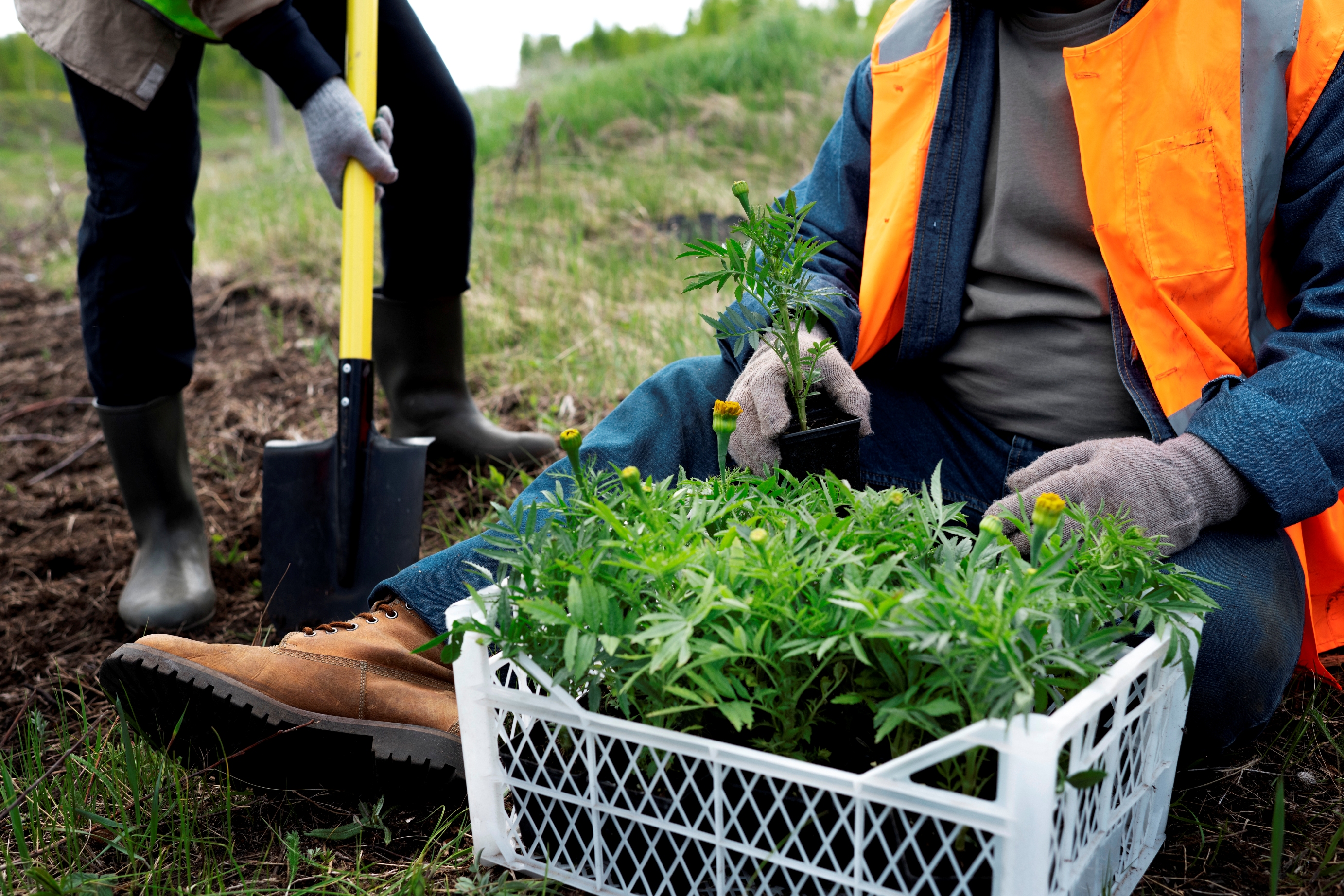
Professional planting is methodical. Planting pits are sized correctly, soil is prepared and improved where needed, stakes and guards are installed where exposure demands them, and young trees are watered on a schedule that matches the season. Mulching reduces evaporation and weeds. This first six months of care decides whether a tree establishes itself or quietly dies over the next two years.
Maintenance is where most projects fail
The planting day is roughly one percent of a tree's useful life. The rest is maintenance. Without a maintenance contract, watering stops, guards go unrepaired, pests go untreated, and pruning is ignored. A professional programme covers:
- Seasonal watering and drought response
- Weeding, mulching, and soil improvement
- Pest and disease inspection and control
- Formative pruning to guide structure and safety
- Replacement planting for casualties within warranty
- Reporting so you can see survival rates and progress
Compliance and documentation
For institutional, government, and oil-and-gas clients, planting is rarely just about greenery. Restoration programmes may carry permit conditions, reporting obligations, and survival-rate targets. A serious contractor documents everything — species lists, quantities, locations, watering logs, and survival audits — so your compliance file is complete at every audit.
A partner who stays past handover
The best measure of a planting partner is what the site looks like a year after they leave the access road. Choose a company that offers structured aftercare, provides written survival guarantees, and treats your trees as an asset to be grown, not a deliverable to be forgotten.
Ready to put this into practice?
Our team can scope, design, and deliver the right environmental, engineering, or safety solution for your site.
Talk to our team